
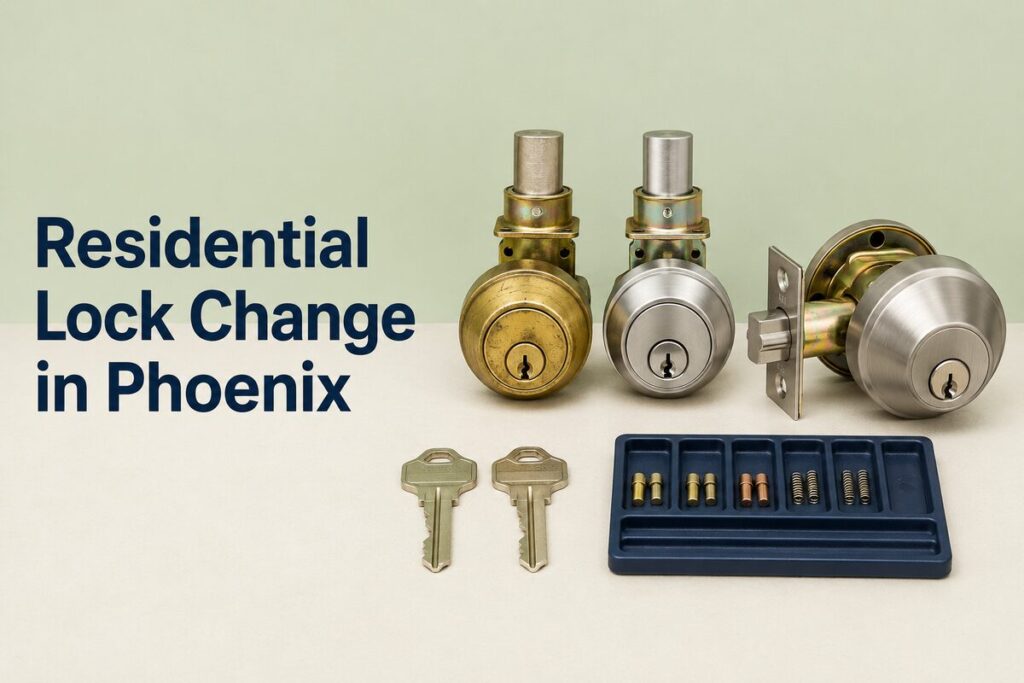
A residential lock change in Phoenix may involve replacing the complete lock, but that is not always necessary. If the existing hardware is secure and works correctly, rekeying can prevent old keys from operating it while preserving the lock already installed.
Replacement is usually the better option when hardware is damaged, heavily worn, poorly fitted, or no longer suitable for the household’s security needs. The right decision begins with the condition of the lock, door, keys, and access situation—not a one-size-fits-all recommendation.
The Short Answer: Rekey for Key Control, Replace for Hardware Problems
Rekeying changes the internal pin arrangement of a compatible cylinder so it works with a new key. The exterior lock body, latch, and most other components remain in place. It is often considered after moving, losing a key, changing tenants, or discovering that too many untracked copies exist.
Lock replacement removes the existing hardware and installs a different lock. It can address a failed component, improve the deadbolt, add keypad access, or correct hardware that does not fit properly.
Neither option is automatically more secure. A correctly installed, serviceable lock may perform well after rekeying, while a new lock can still perform poorly if it is incompatible with the door or installed incorrectly. A locksmith should inspect the complete entry before recommending either service.
Rekeying vs. Residential Lock Change in Phoenix
The following comparison provides a practical starting point:
| Condition | Rekey the lock | Replace the lock |
|---|---|---|
| Hardware works smoothly | Often appropriate | Usually unnecessary unless upgrading |
| Keys are lost or unaccounted for | Changes which keys operate the lock | Also restores key control with new hardware |
| Cylinder or latch is damaged | May not correct the failure | Often the more suitable option |
| Home has several compatible locks | May allow matching them to one key | May be needed if hardware is incompatible |
| Household wants keypad access | Not applicable to the feature change | Smart or keypad hardware may be installed |
| Finish is severely worn or corroded | Keeps the existing appearance | Provides new exterior hardware |
A professional lock rekey service can determine whether the existing cylinders are compatible and in suitable condition. If the lock body or related components need to be replaced, review the company’s residential lock change service.
When Rekeying Is Usually the Practical Choice
Rekeying focuses on key control. It is worth considering when you trust the hardware but no longer trust every key that may operate it.
After Moving Into a Previously Occupied Home
Previous owners, tenants, contractors, cleaners, relatives, and property staff may have received copies. Even when known keys are returned, the number of duplicates may be uncertain. Rekeying compatible exterior locks establishes a new key without discarding serviceable hardware.
When a Key Is Lost
A missing key creates a different concern than a key locked inside. If it cannot be accounted for—especially when it was attached to information identifying the home—changing the key combination can prevent that key from continuing to work.
If you are unable to enter, a home lockout service can restore authorized access before the key-control issue is addressed.
When Too Many Different Keys Are in Use
Some homes have separate keys for the front, side, patio, and garage-entry doors. When the cylinders are compatible, they may be rekeyed to operate with one key.
Compatibility must be confirmed rather than assumed because different keyways and lock designs cannot always be combined.
After Household or Rental Access Changes
Changes involving roommates, tenants, caregivers, or service providers may leave old keys in circulation. Property ownership, lease terms, association rules, and applicable requirements should be checked before altering locks on a rental or shared entry.
When Full Lock Replacement Makes More Sense
Replacement addresses the hardware itself. It may be appropriate when the current lock cannot deliver reliable operation or the desired function.
The Lock Is Worn or Mechanically Damaged
Warning signs include:
- A key that binds.
- A loose exterior cylinder.
- A thumb turn that catches.
- A latch that does not retract consistently.
- Visible tampering.
- A deadbolt that will not extend fully.
Rekeying will not repair every worn latch, distorted housing, or damaged internal component.
The Door Needs a Better Deadbolt
A door with only a spring latch may need a different locking setup. A technician can assess the door preparation, backset, bore dimensions, strike alignment, and frame condition before recommending deadbolt installation.
Any applicable property or association requirements should be confirmed before hardware changes are made.
The Household Wants Keypad or Connected Access
A conventional cylinder cannot gain app control or access codes through rekeying. That feature change requires suitable electronic hardware.
Professional smart lock installation should include checking door alignment, physical backup access, battery placement, and the lock’s suitability for Arizona exposure.
The Existing Hardware Does Not Fit Correctly
A replacement may be necessary when:
- The latch uses the wrong backset.
- The cylinder is loose in the bore.
- The deadbolt meets the strike at an angle.
- The bolt cannot extend completely into the frame.
Installing another lock without correcting alignment may reproduce the same problem.
How Phoenix Conditions Affect Residential Locks
Exterior lock hardware in Phoenix faces intense sunlight, high surface temperatures, dust, and wind-driven debris during monsoon conditions. These factors can affect finishes, keypads, batteries, and moving parts. Dark metal exposed to direct afternoon sun may also become uncomfortable to touch.
Fine dust can collect around a keyway or latch, while door movement can place pressure on a bolt. If pulling, pushing, or lifting the door changes how the key turns, alignment may be part of the problem. More force is not a repair; it increases the chance of bending a key or damaging the cylinder.
Electronic locks add other considerations. Battery life, seals, keypad visibility, physical backup access, and manufacturer temperature guidance should be reviewed. Hardware installed on a shaded entry may experience different exposure from the same model on a west-facing door.
What a Professional Lock Assessment Should Cover
Before recommending a residential lock change, a locksmith should ask why the service is being requested. Lost keys, a move-in, a failed deadbolt, an attempted break-in, and a smart-lock upgrade have different objectives.
The assessment should include:
- Current key control and the number of exterior entries.
- Lock and cylinder condition.
- Latch or deadbolt operation with the door open and closed.
- Door thickness, backset, bore preparation, and strike alignment.
- Compatibility among locks if one-key operation is requested.
- Evidence of forced entry, loose hardware, or frame damage.
- Household preferences for mechanical keys, codes, or connected access.
Locksmith Phoenix Mobile Locksmith states that it provides a quote before beginning work. Its website describes the business as family owned and locally operated, licensed in Arizona, bonded and insured, with mobile coverage across the Phoenix Metro service area.
The company also states that it has served Phoenix since 2010 and has more than 15 years of experience.
Homeowners should still confirm the proposed scope, hardware, included keys, and testing procedure. The company’s About Us page provides additional background.
What Happens During Rekeying or Replacement?
For rekeying, the technician generally removes or accesses the compatible cylinder, changes its pin configuration, prepares the new key, and tests operation. Each authorized exterior lock included in the service should be checked individually.
For replacement, the existing hardware is removed and the door preparation is inspected. The new latch, cylinder, trim, and strike components are installed as required.
The technician should verify that:
- The latch retracts cleanly.
- The bolt extends fully.
- Mounting screws are secure.
- The key operates without binding.
- The interior thumb turn moves correctly.
Testing should occur with the door open and closed. A lock that works only when the door is open may indicate strike or alignment pressure. That issue should be corrected instead of leaving the homeowner to push or lift the door during normal use.
Residents can review the company’s broader locksmith services when several entries or hardware types need attention. Neighborhood coverage includes areas such as Alhambra, Maryvale, and Camelback East.
Special Situations That Require Additional Care
If there are signs of forced entry or attempted burglary, avoid disturbing possible evidence and contact law enforcement when appropriate. A damaged cylinder or strike plate may be only one part of the problem; the door and frame should also be evaluated.
An urgent access problem involving damaged or nonfunctional hardware may call for an emergency locksmith. Explain the symptoms and visible damage accurately so the technician can evaluate the appropriate equipment and service.
For rentals, condominiums, or homes with shared entries, confirm who is authorized to approve changes. Do not alter common-area or regulated hardware without checking applicable requirements.
Residential Lock Change in Phoenix: Frequently Asked Questions
What is the difference between rekeying and replacing a lock?
Rekeying changes the internal pin configuration so the existing lock works with a new key. Replacement removes the existing hardware and installs a different lock, latch, cylinder, or complete assembly.
Should I rekey or replace the locks after moving into a home?
Rekeying may be suitable when the existing hardware is compatible, secure, and operating correctly. Replacement may be preferable when locks are damaged, worn, incorrectly fitted, or no longer meet the household’s access needs.
Should I change my locks after losing a house key?
An unaccounted-for key may create a key-control concern. Rekeying can prevent the missing key from operating a compatible lock, while replacement may be needed if the hardware is also damaged or due for an upgrade.
Can all the locks in my home be changed to use one key?
Compatible locks may be rekeyed to operate with the same key. Different keyways, manufacturers, lock types, or incompatible cylinders may prevent one-key operation unless some hardware is replaced.
What are the signs that a lock should be replaced?
Replacement may be appropriate when the cylinder is loose, the key binds, the thumb turn catches, the latch fails to retract, the deadbolt does not extend fully, or the hardware shows damage from wear or tampering.
Can Phoenix heat and dust damage residential locks?
Sun exposure, high surface temperatures, fine dust, and monsoon debris can affect finishes, keypads, batteries, and moving components. Door alignment can also place pressure on a latch or deadbolt.
Can a smart lock replace my existing deadbolt?
It depends on the door preparation, backset, thickness, bore dimensions, alignment, and smart-lock design. Physical backup access and the hardware’s suitability for exterior Arizona exposure should also be evaluated.
Can a tenant authorize a residential lock change?
Authorization depends on the lease, property-management procedures, ownership, and applicable requirements. Tenants should contact the owner or property manager before approving permanent changes to rental or shared-entry hardware.
Why does my deadbolt work when the door is open but not closed?
This commonly indicates pressure or misalignment between the bolt and strike plate. The door position, hinges, weather seals, strike preparation, and frame should be inspected instead of forcing the bolt.
How should a newly installed or rekeyed lock be tested?
Each authorized key should be tested with the door open and closed. The key, latch, deadbolt, and interior thumb turn should operate without binding, and the bolt should extend completely into the strike.
Final Thoughts
A residential lock change in Phoenix is appropriate when the hardware is damaged, unsuitable, or being upgraded. Rekeying is often the more focused solution when the existing lock works properly but old or missing keys should no longer provide access.
The best choice comes from inspecting the cylinder, latch, deadbolt, door alignment, key history, and household access needs together.
To request an assessment, call Locksmith Phoenix Mobile Locksmith at (602) 834-2303 or use the contact page. Non-urgent questions can also be sent to info@locksmith-phoenix-mobile-locksmith.com.
