
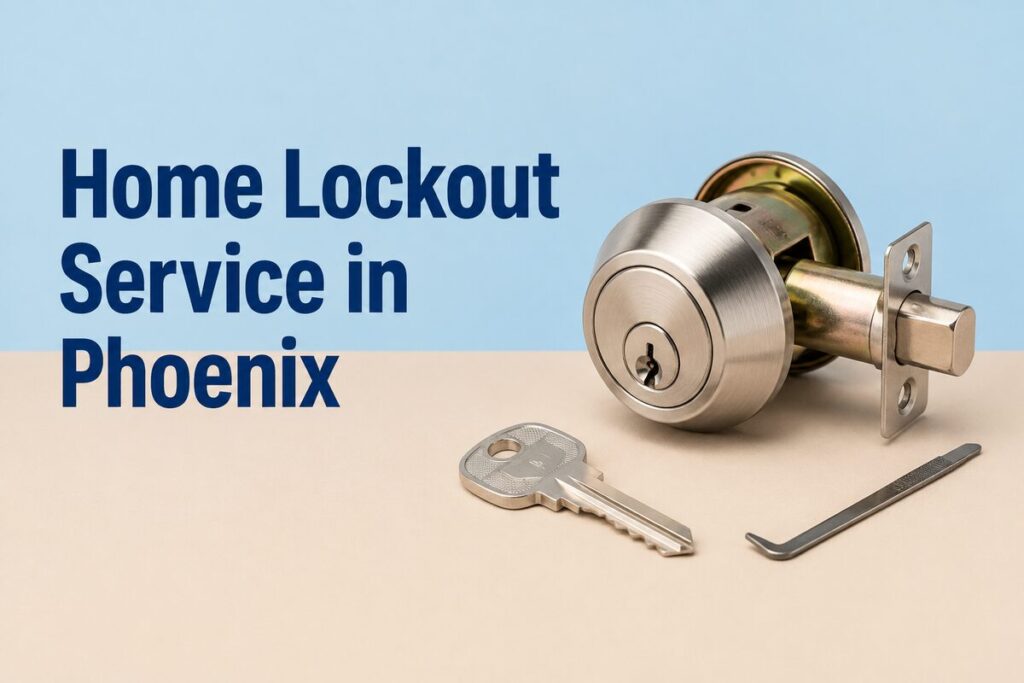
Being locked out of your home is stressful, but the decisions you make next can prevent damage and reduce risk. A home lockout service in Phoenix can help restore authorized access when a key is missing, a lock will not turn, or a door closes behind you.
Phoenix heat adds another concern: staying outdoors may be unsafe for children, older adults, pets, and anyone with a medical condition. Start by checking for immediate danger, then choose the safest authorized way to regain entry.
First, Check for an Immediate Safety Risk
Treat the situation as an emergency if a child, vulnerable adult, or pet is locked inside; food is cooking; water is running; or there is smoke, a fire risk, or another urgent hazard. Contact emergency services when someone or something inside faces immediate danger. A locksmith is not a substitute for firefighters, police, or medical responders in a life-safety event.
Arizona heat also changes how you should handle an ordinary lockout. Move to shade or an air-conditioned public space when possible. If you feel dizzy, confused, weak, or unusually nauseated, seek medical assistance.
Once urgent risks are ruled out, take a moment to identify what caused the lockout. A missing key, a key left inside, a jammed deadbolt, and a depleted smart-lock battery require different solutions.
Safe Steps Before Calling a Home Lockout Service in Phoenix
There are several things you can check without forcing the lock or creating a new security problem.
- Confirm every permitted entry point. Check another exterior door only if you are authorized to use it and can reach it safely. Do not climb onto a roof, scale a wall, or enter through an unstable window.
- Contact another authorized keyholder. A household member, property owner, leasing office, or property manager may have a legitimate spare key.
- Check your smart-lock options. Confirm that the app, access code, or manufacturer-approved backup-power procedure is available. Avoid repeated code attempts.
- Look at the key and lock condition. If the key is bent, cracked, or difficult to insert, stop using it. Continued pressure can break it inside the cylinder.
- Prepare proof of authorization. Identification showing the address, a lease, utility documentation, or confirmation from a property manager may help establish your right to enter.
If these checks do not restore access, contact a professional home lockout service and explain exactly what happened.
| Situation | Safer next step | Main concern |
|---|---|---|
| Keys are visible inside | Call an authorized keyholder or locksmith | Avoid damaging the door or glass |
| Key will not turn | Stop applying force and describe the symptoms | The key may snap or the cylinder may be worn |
| Smart lock is unresponsive | Check the approved backup-power method | Repeated attempts may not solve a hardware issue |
| Key is lost outdoors | Regain entry, then evaluate rekeying | An unknown person may find the key |
| Rental home or apartment | Notify management when required | Ownership and alteration rules may apply |
What Not to Do During a Residential Lockout
Online videos often make improvised entry methods look simple. In practice, using a card, drill, screwdriver, wire, or pry bar can damage the latch, strike plate, frame, weather seal, or lock finish. A broken window creates injury and property-security risks that extend beyond the original lockout.
Do not attempt to pick a lock you do not own or have permission to access. For a leased home, contact the landlord or management office before authorizing permanent hardware changes unless safety requires a different response.
Avoid repeatedly twisting a key that has become stiff in Phoenix dust or after prolonged sun exposure. Exterior hardware can collect fine debris, and lubricants not intended for locks may attract more dust. A technician can determine whether the problem is the key, cylinder, latch alignment, or door movement.
How a Professional Locksmith Handles the Entry
A professional visit should begin with authorization, not the tool bag. The technician may ask who occupies or owns the property and request documentation. If your identification is inside, the technician may use other reasonable ways to confirm occupancy before or immediately after entry.
The next step is an inspection of the door, lock type, cylinder, latch, and visible damage. The appropriate entry method depends on the hardware. A standard knob lock, deadbolt, keypad, interconnected lock, and high-security cylinder do not operate the same way.
When conditions allow, the goal is to preserve the door and hardware. A failed component, damaged cylinder, improper installation, or reinforced security feature may require another method. The locksmith should explain why drilling or replacement is proposed.
Locksmith Phoenix Mobile Locksmith states that it provides a quote before starting work. Its site also describes the company as locally owned and family operated, licensed in Arizona, bonded and insured, with mobile service across the Phoenix Metro service area. These are useful trust signals to review alongside the specific scope of work and the condition of your lock.
Why Phoenix Homes Experience Lock and Door Problems
A lockout is not always caused by forgetfulness. Phoenix conditions can expose exterior hardware to intense sun, high surface temperatures, fine dust, and wind-driven debris during monsoon season. These factors may affect keypads, finishes, batteries, and moving lock components over time.
Door alignment can also change. Wood components may expand or contract, weather seals may create pressure, and a door can settle so the latch no longer lines up cleanly with the strike plate. If lifting, pulling, or pushing the door changes how the key turns, alignment may be part of the problem. That symptom should be assessed instead of masked with more force.
For a worn cylinder or a key-control concern, lock rekey service may be appropriate. If the hardware itself is damaged or no longer suitable, a residential lock change may make more sense. A technician can also evaluate an exterior entry that may benefit from deadbolt installation.
What to Check After the Door Is Open
Regaining entry may not address the cause. Test the lock with the door open and closed. The key should insert, rotate, and withdraw without excessive force, while the latch and deadbolt should meet their strike plates cleanly.
Choose the next step based on the cause:
Keys Were Left Inside
If the hardware works normally and every key is accounted for, no lock change may be necessary. Consider creating a spare-key plan with a trusted authorized person. Do not hide a key in an obvious exterior location.
A Key Was Lost or Stolen
If a key cannot be accounted for, ask whether the existing cylinder can be rekeyed so the missing key no longer operates it. Rekeying changes the internal pin configuration while keeping compatible hardware. Replacement may be preferable when the lock is damaged, heavily worn, or due for an upgrade.
The Lock or Key Failed
A copied key may be inaccurate, an original key may be worn, or the cylinder may have an internal problem. The technician should identify the likely failure before recommending service. Review the company’s broader residential and emergency services if more than one entry has similar symptoms.
A Smart Lock Lost Power or Connectivity
Replace batteries according to the manufacturer’s instructions and confirm that physical backup access works. If the device has recurring power, alignment, or keypad issues, smart lock installation may include evaluating whether the model and installation are suitable for the entry and Arizona exposure.
Choosing a Locksmith Without Guesswork
Before authorizing work, confirm the company name, service address, problem, and proposed scope. Ask how authorization will be verified and whether the expected method preserves the existing hardware. If replacement is necessary, request an explanation of the options.
Review the provider’s About Us information and contact details. The company states that it has served Phoenix since 2010 and has more than 15 years of experience. Its site displays a 4.6-star rating and more than 70 Google reviews; check the current profile because ratings can change.
Local coverage also matters. The company publishes neighborhood pages for areas such as Alhambra, Maryvale, and North Mountain. Confirm that your exact address is within the current mobile service area when you call.
When a Home Lockout Becomes a Broader Security Issue
Some lockouts reveal a bigger problem. A missing identifiable key, evidence of tampering, a forced cylinder, or unknown key access may justify rekeying or replacement. For signs of attempted burglary, avoid disturbing evidence and contact law enforcement when appropriate.
After moving into a previously occupied home, consider who may still hold old keys. Check lease terms, association rules, and applicable requirements before changing shared or regulated hardware.
If the lockout occurs alongside damaged hardware or a suspected security incident, discuss the situation with an emergency locksmith and explain what you observed. Accurate details help the technician bring suitable equipment and evaluate the right service.
Home Lockout Service in Phoenix: Frequently Asked Questions
What should I do first if I am locked out of my Phoenix home?
Check for an immediate safety risk involving a child, vulnerable adult, pet, fire hazard, running water, or cooking appliance. Contact emergency services for a life-safety situation. Otherwise, move out of direct sun and check for another authorized entry option or keyholder.
Can a locksmith open my home without damaging the lock?
Many residential locks can be addressed using methods intended to preserve the existing hardware. However, a failed internal component, damaged cylinder, reinforced lock, or improper installation may require drilling or replacement. The technician should explain the proposed method before beginning.
What proof do I need before a locksmith opens the door?
A locksmith should verify that you are authorized to enter the property. Identification showing the address, a lease, utility documentation, property records, or confirmation from an owner or property manager may be used depending on the circumstances.
What happens if my identification is locked inside?
Explain the situation when requesting service. The technician may use other reasonable documentation or confirmation methods to establish occupancy and may ask to see the identification immediately after authorized entry is restored.
Should I rekey my locks after losing a house key?
Rekeying may be appropriate when an unaccounted-for key could be found or used by someone else. It changes the internal key combination while retaining compatible hardware. A lock change may be more suitable when the existing hardware is damaged or worn.
Can a locksmith help if my smart lock battery is depleted?
A technician can evaluate the lock and available physical access options. Before requesting service, check the manufacturer-approved backup-power procedure or physical backup key, but avoid repeated attempts that could activate a temporary lockout mode.
What should I do if I am locked out of a rental home?
Contact the property manager, owner, or leasing office because they may have an authorized spare key or specific access procedure. Confirm any lease requirements before approving permanent changes to the lock or shared entry hardware.
Can Phoenix heat and dust cause a residential lock problem?
Intense sun, high surface temperatures, fine dust, and monsoon debris may affect keypads, batteries, finishes, and moving components. Door alignment can also change, creating pressure between the latch or deadbolt and the strike plate.
Should I force a key that will not turn?
No. Continued pressure can bend the key, break it inside the cylinder, or damage internal lock components. Stop using the key and have the key, cylinder, latch alignment, and door position evaluated.
What should I inspect after the locksmith opens the door?
Test the key and lock with the door both open and closed. Confirm that the key turns normally and that the latch and deadbolt align with their strike plates. If a key remains missing, discuss rekeying or replacement before considering the incident resolved.
Final Thoughts
A home lockout service in Phoenix should restore authorized access while protecting the door, lock, and household as much as the circumstances allow. Begin with immediate safety, avoid improvised force, verify legitimate alternatives, and be ready to show that you are authorized to enter.
If you cannot regain access safely, call Locksmith Phoenix Mobile Locksmith at (602) 834-2303 or use the contact page to request service in the Phoenix Metro area. You can also email info@locksmith-phoenix-mobile-locksmith.com with non-urgent questions about your lock or key situation.
