
An exterior door may have an attractive handle and a working latch while still lacking a dependable deadbolt. Loose cylinders, short bolts, misaligned strikes, worn hardware, and doors secured only by a spring latch can reduce the effectiveness of an entry point.
Deadbolt Installation in Phoenix should account for the complete door system: the lock, bolt, strike plate, frame, hinges, door thickness, and household access needs. Installing new hardware without addressing alignment or frame damage can leave the door difficult to operate.
Locksmith Phoenix Mobile Locksmith helps homeowners evaluate exterior locks and install compatible deadbolt hardware. Call (602) 834-2303 or use the contact page to discuss your door.
What Is a Deadbolt?
A deadbolt uses a solid bolt that extends from the door into a strike plate mounted on the frame. Unlike the spring latch found in many knobs and levers, the deadbolt is moved by a key, thumbturn, keypad, or electronic motor.
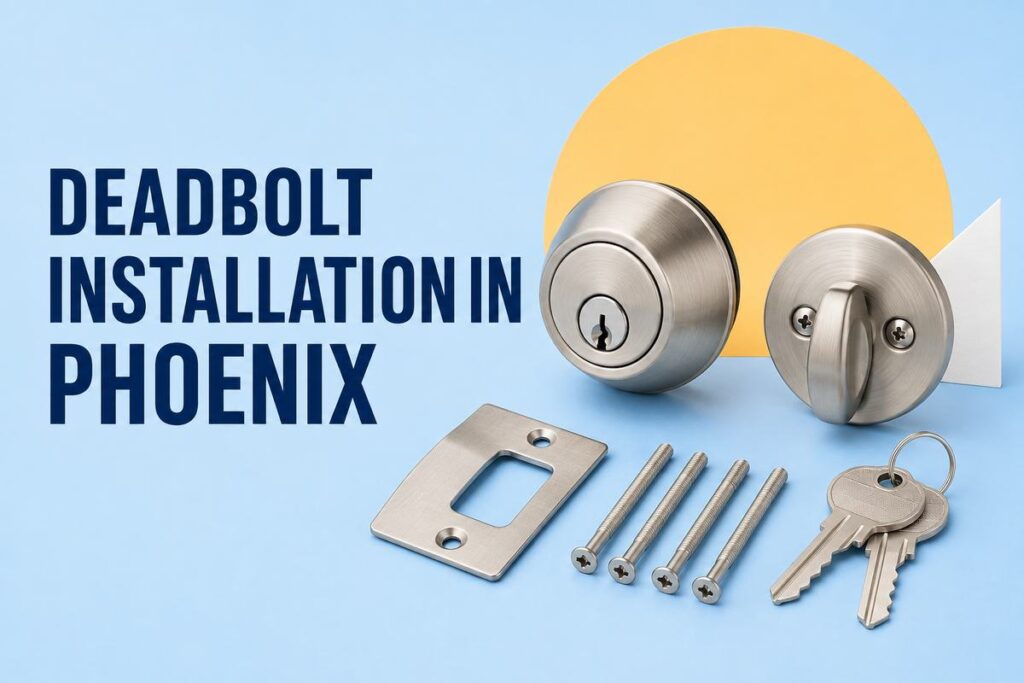
Common residential deadbolt components include:
- Exterior keyed cylinder.
- Interior thumbturn.
- Solid or reinforced bolt.
- Faceplate.
- Strike plate.
- Mounting screws.
- Interior connecting hardware.
- Mechanical keys or electronic access components.
A deadbolt should extend completely and move without excessive resistance. The company’s Deadbolt Installation service provides information about residential installation options.
Signs Your Exterior Door Needs a Deadbolt Upgrade
The Door Has Only a Keyed Knob or Lever
A keyed knob or lever generally uses a spring latch. It provides everyday access control but does not function the same way as a dedicated deadbolt.
Exterior doors without deadbolts should be evaluated to determine whether compatible hardware can be added.
The Deadbolt Is Loose
Movement around the exterior cylinder or interior thumbturn can indicate loose mounting screws, worn door material, damaged components, or incorrect installation.
A loose deadbolt should not simply be tightened repeatedly without identifying why the hardware is moving.
The Key Is Difficult to Turn
A key that sticks, catches, or requires force may point to:
- Internal cylinder wear.
- A damaged key.
- Bolt and strike misalignment.
- Pressure from a sagging door.
- Dirt or unsuitable lubricant inside the keyway.
- Worn lock components.
Forcing the key can damage the cylinder or cause the key to break.
The Bolt Does Not Extend Completely
A properly operating deadbolt should extend fully into the receiving area of the frame. If the bolt stops early, rubs against the strike, or works only when the door is pushed, alignment needs attention.
The Strike Plate Is Loose or Damaged
The strike plate receives the bolt and connects the lock to the door frame. Loose screws, damaged wood, poor placement, or an undersized opening can affect deadbolt operation.
The Hardware Shows Visible Damage
Bent components, corrosion, impact marks, cracks, or damage around the keyway are reasons to have the lock inspected.
You Recently Moved Into the Home
New homeowners may not know how many copies of the existing keys are still in circulation. Functional locks may be rekeyed, while damaged or unsuitable deadbolts may require replacement.
Review the company’s Lock Rekey Service in Phoenix when updating household access after a move.
Types of Residential Deadbolts
Single-Cylinder Deadbolts
A single-cylinder deadbolt uses a key on the exterior and a thumbturn on the interior. This is a common configuration for residential entry doors.
The surrounding door design should be considered. Glass positioned close to the interior thumbturn may create an access concern if it can be reached from outside.
Double-Cylinder Deadbolts
A double-cylinder deadbolt requires a key on both sides. This may address certain nearby-glass concerns, but it also affects how occupants exit the home.
Homeowners should consider applicable safety requirements and emergency egress before selecting this configuration. A key-dependent interior should never be chosen without understanding how it affects household evacuation.
Keypad Deadbolts
A keypad deadbolt uses a numeric code and may also include a mechanical keyway. Separate codes can help households manage access without distributing additional physical keys.
Smart Deadbolts
Smart deadbolts may provide app control, Bluetooth, Wi-Fi, access history, notifications, or temporary user codes. Features and backup-access methods vary by model.
Homeowners interested in electronic hardware should review Smart Lock Installation in Phoenix before making a purchase.
High-Security Deadbolts
Some exterior doors may benefit from deadbolts with stronger components, restricted key options, reinforced strikes, or resistance features designed for particular security concerns.
The most appropriate hardware depends on the door construction and intended use. A premium lock cannot compensate for a badly damaged frame or weak door.
Door Alignment Matters as Much as the Deadbolt
A common deadbolt problem begins with the door rather than the lock. Phoenix heat, seasonal moisture, everyday use, worn hinges, and building movement can affect how the door sits in the frame.
Signs of an alignment issue include:
- The door must be lifted before it locks.
- The bolt rubs against the strike plate.
- The latch contacts the frame.
- The gap around the door is uneven.
- The door closes differently at certain times.
- The deadbolt works when the door is open but not when closed.
- The lock requires pressure from inside or outside.
Installing a new deadbolt without correcting alignment can transfer the same problem to the new hardware.
The locksmith should test the door while open and closed. This helps distinguish a cylinder problem from a strike or frame issue.
The Strike Plate and Frame Need Proper Support
The deadbolt extends into the frame, so the receiving hardware matters. A properly positioned strike plate allows the bolt to enter without rubbing.
During installation, the locksmith may evaluate:
- Strike-plate size.
- Screw length.
- Existing screw holes.
- Frame material.
- Bolt depth.
- Alignment with the cylinder.
- Damage around the receiving opening.
- Nearby trim or weatherstripping.
Longer screws or reinforced hardware may be appropriate for certain doors, but the correct choice depends on the frame and installation conditions.
Randomly installing oversized screws can damage hidden materials, so hardware selection should be deliberate.
When to Rekey Instead of Replace a Deadbolt
A deadbolt that operates smoothly and fits the door correctly may not need replacement. If the main concern is that old keys still work, rekeying may be sufficient.
Rekeying may be appropriate after:
- Buying a home.
- Moving into a rental.
- Losing a house key.
- A former roommate leaving.
- Completing remodeling work.
- Ending access for a service provider.
- A tenant turnover.
Replacement may be better when the lock is worn, damaged, loose, incompatible, or unable to provide the access features the homeowner needs.
The Residential Lock Change service can help homeowners compare these options.
Deadbolt Installation After Moving
A move-in lock review should cover every exterior access point—not only the front entrance.
Check:
- Front door.
- Back door.
- Side entrance.
- Garage-to-home door.
- Detached garage.
- Exterior storage room.
- Guesthouse.
- Home office with exterior access.
- Patio doors with keyed hardware.
- Gates that connect to private areas.
Compatible functional locks may be rekeyed to use a new household key. Damaged hardware can be replaced, and one frequently used entrance may be suitable for a keypad or smart deadbolt.
This creates a consistent access plan instead of treating every door as an unrelated project.
Deadbolts for Rental Properties
Landlords and property managers should inspect exterior locks between occupants. Returned keys do not confirm that no copies exist.
A turnover checklist may include:
- Rekeying compatible locks.
- Replacing damaged deadbolts.
- Removing old access codes.
- Inspecting door alignment.
- Checking strike plates and frames.
- Documenting keys issued to the new tenant.
- Reviewing garage and storage access.
- Updating management key records.
For professionally managed facilities, residential-grade hardware may not be appropriate for every entrance. The Commercial Lock Change service can help evaluate office, retail, and multi-use property doors.
Deadbolt Maintenance for Phoenix Homes
Residential locks benefit from periodic visual and operational checks.
Homeowners should watch for:
- Loose screws.
- Difficulty inserting the key.
- A key that no longer turns smoothly.
- A thumbturn that feels unstable.
- Corrosion or finish deterioration.
- A bolt that rubs against the strike.
- Changes in door alignment.
- Low-battery warnings on electronic locks.
- Damage following an attempted forced entry.
Use only products approved for the lock hardware. Household oils or unapproved sprays may attract dirt or affect electronic components.
If a key breaks inside the lock, avoid pushing the fragment deeper. A locksmith can evaluate the cylinder and determine whether extraction, rekeying, or replacement is needed.
What Happens During Deadbolt Installation?
The process depends on whether the door already has correctly positioned deadbolt preparation.
Installation may involve:
- Inspecting the door and frame.
- Measuring door thickness and backset.
- Reviewing existing bore holes.
- Confirming the selected deadbolt is compatible.
- Preparing the door when appropriate.
- Installing the exterior cylinder and interior thumbturn.
- Positioning the bolt and faceplate.
- Aligning the strike plate.
- Testing the lock with the door open.
- Testing the lock with the door closed.
- Confirming that keys and thumbturn operate smoothly.
If the door or frame is damaged, additional repair may be needed before the hardware can function correctly.
What to Do During a Lockout
A damaged deadbolt, lost key, or failed electronic lock can prevent an authorized occupant from entering. Avoid forcing the door, drilling the lock, or inserting improvised tools.
The company provides Home Lockout Service for residential access issues. More urgent damaged-lock situations can be reviewed through its Emergency Locksmith service.
Deadbolt Installation Across Phoenix
Locksmith Phoenix Mobile Locksmith serves homes throughout its Phoenix service area, including Alhambra, Maryvale, North Mountain, Sunnyslope, Encanto, Central Phoenix, Downtown, Midtown, Camelback East, Biltmore, Glendale, and Paradise Valley.
Different properties can require different hardware. Historic homes may have older door preparation, while newer properties may have standard bore measurements or existing electronic locks.
Locksmith Phoenix Mobile Locksmith states that it has served Phoenix since 2010 and operates as a licensed, bonded, and insured mobile locksmith. Learn more on the company’s About Us page.
Deadbolt Installation in Phoenix: Frequently Asked Questions
What is the difference between a deadbolt and a keyed door knob?
Should every exterior door have a deadbolt?
Can a deadbolt be installed on an existing door?
Why does my deadbolt work when the door is open but not when it is closed?
Can an existing deadbolt be rekeyed?
What is a single-cylinder deadbolt?
What is a double-cylinder deadbolt?
Can I replace a regular deadbolt with a keypad lock?
Why is my deadbolt loose?
When should a deadbolt be replaced instead of repaired?
Final Thoughts
Deadbolt Installation in Phoenix should strengthen the entire entry point—not simply place new hardware in an existing hole. Door condition, frame support, strike alignment, lock compatibility, key control, and safe household use all matter.
For help evaluating, rekeying, replacing, or installing a residential deadbolt, call Locksmith Phoenix Mobile Locksmith at (602) 834-2303 or request service online.
